
Short answer: it is physically possible, and we still recommend against it in almost every case. Garage door spring replacement is consistently ranked among the most dangerous DIY projects in the house - not because the steps are complicated, but because the energy involved is unforgiving. A wound torsion spring is storing enough force to lift a door that can weigh 300 to 500 pounds, and it releases all of that force instantly if something slips. Here is an honest look at what the job involves, where it goes wrong, and when it genuinely makes sense to call a pro.
Why Springs Are the Most Dangerous Part of the Door
Your door does not lift because the opener is strong. The opener contributes maybe as much muscle as one person - the springs do the real work by counterbalancing the door’s weight. To do that, a torsion spring above the door is wound to high tension with steel winding bars, a few quarter-turns at a time, on a ladder, at head height.
If a winding bar slips, is the wrong size, or the cone lets go mid-wind, the stored energy releases in a fraction of a second. The spring, the bar, or both can spin with enough force to break bones, and you are standing on a ladder next to it when it happens. Emergency rooms see these injuries every year, and they are the reason most experienced remodelers who will tackle anything else in the house still hand springs to a specialist.
Torsion vs. Extension Springs
Most modern doors use torsion springs - the tightly wound coil on a shaft above the closed door. Older or lighter installations sometimes use extension springs, which stretch along the horizontal tracks. Extension springs look less intimidating but have their own failure mode: without a safety cable run through the coil, a snapped extension spring becomes a steel whip. If your door has extension springs and no safety cables, that upgrade alone is worth a service call.
Where DIY Spring Jobs Go Wrong
Beyond the injury risk, most of the DIY spring problems we get called to fix were not accidents - they were quiet mistakes that showed up later:
- Wrong spring spec. Springs are matched to the door’s weight by wire size, diameter, and length. Big-box replacement springs are one-size-fits-most, and “close enough” leaves the door out of balance.
- Wrong tension. An over- or under-wound spring means the door slams, floats, or sits crooked - and the opener spends every cycle fighting the imbalance until its motor or gear gives out. A spring mistake often becomes an opener replacement six months later.
- Replacing one spring on a two-spring door. Springs wear as a set. Pairing a fresh spring with a tired one rebalances the door unevenly, and the old one usually follows its partner within the year.
- Improvised winding bars. Screwdrivers and rebar are not winding bars. This is the mistake that causes the injuries.
How to Tell Your Spring Is Failing - or Already Broken
- A loud bang from the garage, like a firecracker - that is the spring letting go
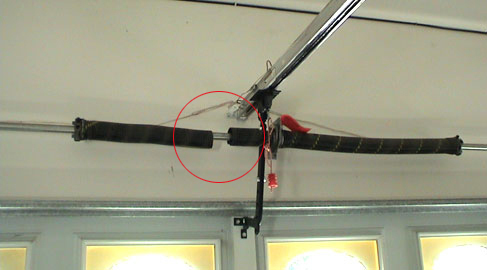
- A visible gap of an inch or two in the coil above the door
- The door suddenly feels extremely heavy, or the opener strains and gives up partway
- The door rises a few inches and stops, or comes down crooked
If the spring has broken: do not keep cycling the opener against it, and do not try to lift the door by hand - without its counterbalance, the door’s full weight is in play, and that is how backs and cables get hurt. Leave it down and make the call.
What It Actually Costs to Have It Done Right
The honest economics are less lopsided than people expect. By the time you buy correctly-specced springs, real winding bars, and spend the better part of a Saturday on a ladder, the savings over a professional job shrink to less than the cost of one urgent-care visit. A pro replaces both springs with the correct spec, rebalances the door, checks the cables and bearings while everything is apart, and is done in about an hour. We break down real numbers in our garage door spring repair cost guide for Tulsa and OKC.
Leave the Springs to Us.
Same-day spring replacement across the Tulsa and OKC metros - correct spec, both springs, door rebalanced, backed by a 5-year warranty. Same rate day or night.
DIY Spring Replacement FAQ
Can I open my garage door with a broken spring?
Do not try. The spring is the counterbalance - with it broken, you or your opener are lifting the door’s full weight. Cycling the opener can burn out its motor or snap the cables, and lifting by hand risks the door falling. Leave the door down until the spring is replaced.
Is it cheaper to replace a garage door spring myself?
On paper, slightly. In practice the gap is small once you buy correctly-specced springs and proper winding bars, and a mis-specced or mis-tensioned spring commonly costs more later in opener wear and a second repair. Our spring cost guide covers the real numbers for Tulsa and OKC.
Should I replace one spring or both?
On a two-spring door, both. Springs wear as a set, and a new spring paired with a worn one leaves the door unevenly balanced - and the old spring usually breaks soon after anyway. Doing both in one visit costs far less than two visits.
How long does professional spring replacement take?
Usually about an hour. A technician arrives with the correct spring spec on the truck, replaces both springs, rebalances the door, and checks cables, bearings, and opener settings while everything is accessible. Same-day service is the norm, not the exception.
Related: Garage Door Spring Repair Cost in Tulsa and OKC | Same-Day Garage Door Repair | The Complete Garage Door Maintenance Checklist